Melanocortin binding
The cyclic peptide acts as an agonist at several melanocortin receptors, including MC1R, MC3R and MC4R.

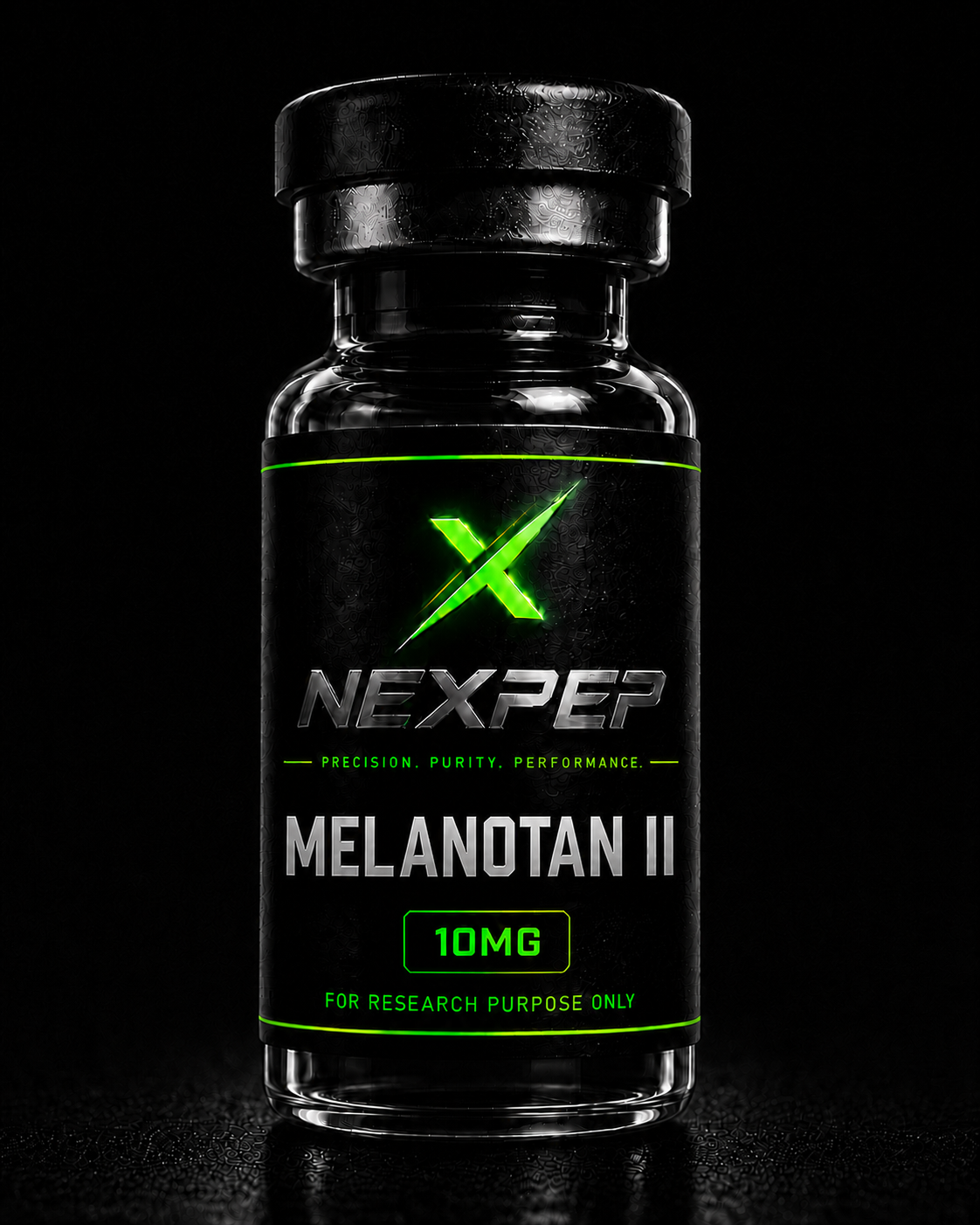
Research profile
Nonselective melanocortin-receptor agonist research peptide
Melanotan II is a synthetic cyclic analogue of alpha-melanocyte-stimulating hormone. Laboratory research uses it to examine melanocortin-receptor signalling across pigmentation, appetite and neuroendocrine pathways.
Scientific context
Melanotan II activates multiple melanocortin receptor subtypes rather than one selective target. Its broad receptor activity makes receptor-selective controls important when interpreting pigmentation, behavioural or metabolic assay results.
Mechanism map
The cyclic peptide acts as an agonist at several melanocortin receptors, including MC1R, MC3R and MC4R.
MC1R activation is associated with melanogenic signalling in pigment-cell models.
MC3R and MC4R activity is studied in appetite, energy-balance and behavioural research models.
Study design
These are experimental design concepts—not recommendations for human use, co-administration or dosing.
Separates peptide-associated readouts from solvent and handling effects.
Match exposure time, matrix and sampling conditions.Helps identify which melanocortin-receptor subtype contributes to an observed signal.
Use a predefined receptor and endpoint rather than assuming selectivity.A single-agent arm provides the clearest interpretation of broad melanocortin activity.
Avoid adding other endocrine-active materials to the primary comparison.Interpretation controls
Evidence trail