Copper coordination
The GHK sequence forms a high-affinity complex with copper, creating a biologically active carrier rather than acting as an unbound mineral salt.

Research profile
Copper-binding tripeptide research material
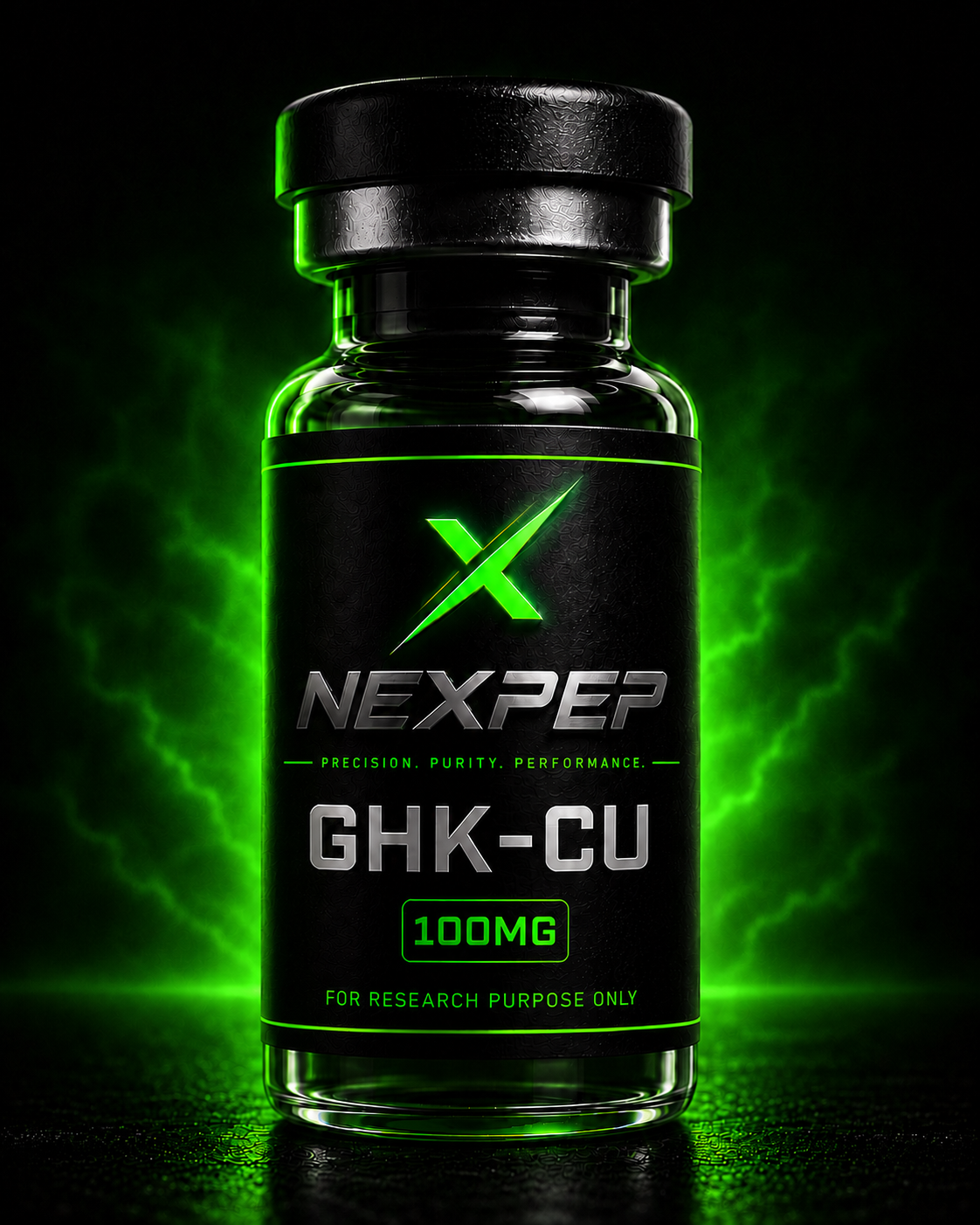
GHK-Cu is the copper complex of the naturally occurring tripeptide glycyl-L-histidyl-L-lysine. Its research value comes from the way the peptide binds and delivers copper within systems involved in extracellular-matrix turnover and tissue remodelling.
Scientific context
GHK-Cu is studied for effects on fibroblast activity, collagen and glycosaminoglycan accumulation, oxidative balance, inflammatory signalling and angiogenesis. Evidence is strongest in laboratory and preclinical models; injectable human safety data remain limited.
Mechanism map
The GHK sequence forms a high-affinity complex with copper, creating a biologically active carrier rather than acting as an unbound mineral salt.
Experimental models report changes in fibroblast behaviour and accumulation of collagen, protein and glycosaminoglycans.
Copper-dependent enzymes and angiogenic signalling make GHK-Cu useful for studying repair-associated extracellular-matrix pathways.
Study design
These are experimental design concepts—not recommendations for human use, co-administration or dosing.
Can support a multi-pathway design comparing matrix/copper signalling with BPC-157 and TB-500-related repair pathways.
Angiogenesis and repair endpoints overlap, so include single-agent arms to preserve attribution.Provides a complementary redox and cellular-energy axis for oxidative-stress or remodelling models.
Validate chemical compatibility and assay interference before any combined preparation.GHK-Cu alone provides the clearest read on copper-dependent matrix and fibroblast responses.
Always include vehicle and copper-control conditions where scientifically appropriate.Interpretation controls
Evidence trail