Aqueous vehicle
Sterile water provides the solvent phase used for controlled dilution or reconstitution studies.

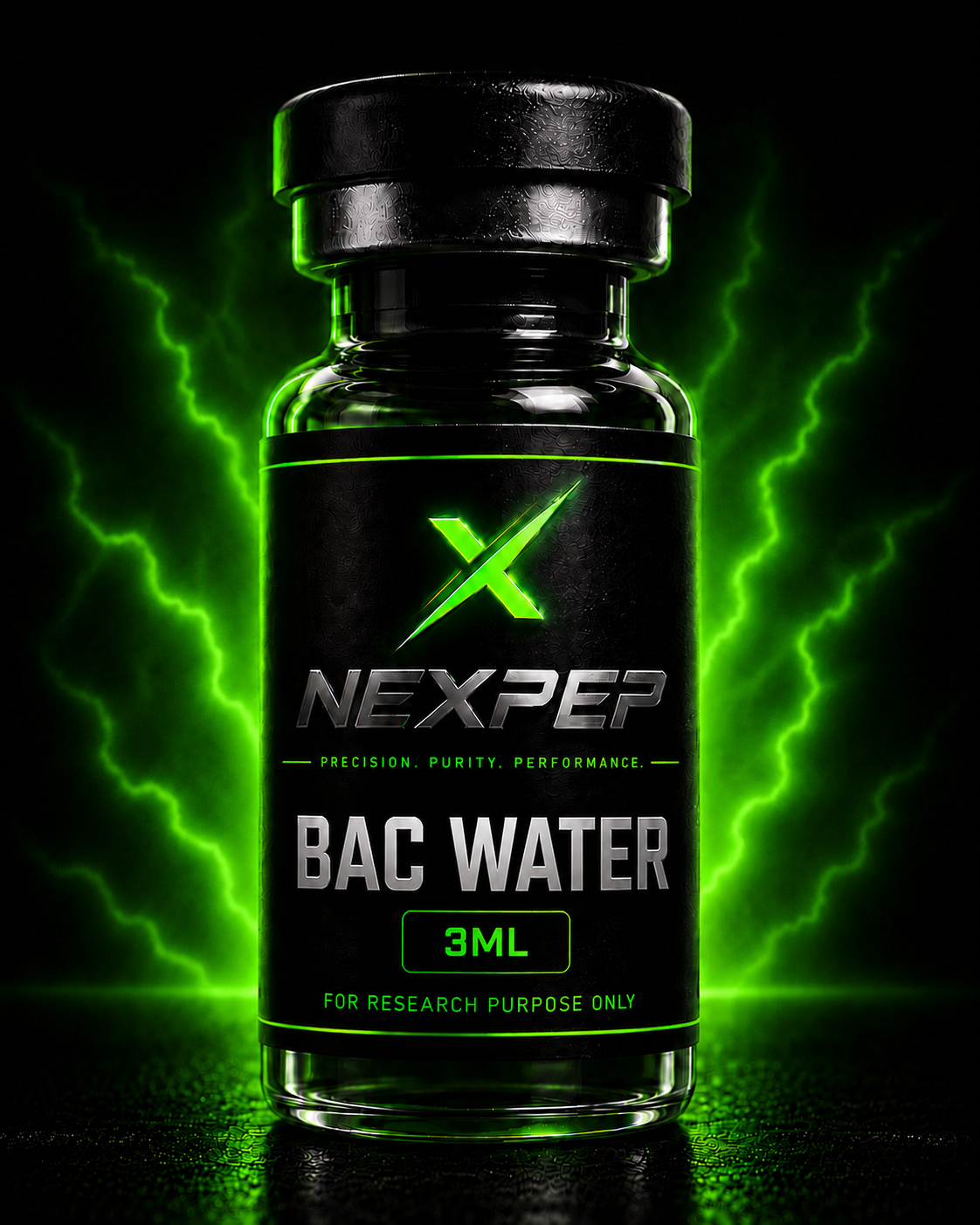
Research profile
Bacteriostatic laboratory diluent
Bacteriostatic Water is sterile water containing 0.9% benzyl alcohol as a bacteriostatic preservative. It is presented as a laboratory supply rather than a peptide and is intended for controlled preparation and compatibility workflows.
Scientific context
In laboratory workflows, bacteriostatic water serves as a preserved aqueous diluent. The benzyl-alcohol preservative inhibits growth of some contaminating microorganisms after entry into the container, but it does not sterilise contaminated material or establish compatibility with a particular research compound.
Mechanism map
Sterile water provides the solvent phase used for controlled dilution or reconstitution studies.
Benzyl alcohol at 0.9% inhibits microbial growth within the container; bacteriostatic does not mean universally antimicrobial or self-sterilising.
Each test article requires its own solubility, stability, adsorption and assay-interference assessment.
Study design
These are experimental design concepts—not recommendations for human use, co-administration or dosing.
Tests whether a specific lyophilised research material remains soluble, stable and measurable in the vehicle.
Use documented analytical acceptance criteria rather than visual clarity alone.Separates effects of the benzyl-alcohol preservative from the water vehicle itself.
Use a comparator only where the protocol and container system permit it.Helps identify whether benzyl alcohol affects cells, enzymes, instruments or analytical readouts.
Match preservative concentration and matrix conditions exactly.Interpretation controls
Evidence trail